Monday, February 14, 2011

Native Plant Gardening

For the past two years, I've been transforming my yard into a native wildflower garden, and now that the snow is finally melting, it looks like I'll finally be able to resume gardening where I left off before winter.

Even though early spring is sort of an "ugly season" with all the dirty snow melting and freezing up again, exposed mud, decayed leaves and grass, and debris that was previously buried under snow, I cannot express how exciting the next few months will be for me. By mid-march (about 3 weeks from now), I'll be seeing my garden gradually come back to life, and perhaps find a few surprises. As you would guess, I've spent hours collecting wildflower seeds and sowing them into newly-dug patches this fall. Now- with a whole new generation of seedlings sprouting- I may finally see some of those efforts pay off.

Gardening with native plants is something that I recommend to everyone, regardless of income, yardspace, or gardening experience. In a world where habitats and ecosystems are increasingly being destroyed by development, the need to restore plant communities plays a crucial role in conservation. Although you might think habitat restoration and improvement would require thousands of acres to be effective, you'd be surprised at how much wildlife benefits from a single acre of native plantings. If you ever decide to plant a few black-eyed susans, coneflowers, and goldenrods, you'll already be attracting countless butterflies, moths, bees, and flower-flies. Planting bushes and shrubs in your yard may also attract small animals and birds seeking shelter. Sometimes an action as simple as not mowing the grass for a few weeks will bring wildlife to your yard.

Most suburban neighborhoods are biological deserts. The neatly clipped lawns and non-native shrubs are not only useless in ecological value, but are often hard to maintain, as they require loads of water, fertilizers, and other resources to keep them healthy. Native plants, on the other hand, require very little upkeep. They're beautiful, inexpensive, and save you plenty of time and resources.

So how do you grow a native plant garden? There are two methods:

One is to simply buy native plants. For many beginner gardeners, this is the easiest way to go. With increasing trends towards native landscaping, many garden stores and nurseries now offer native plants for sale. Here, you'll find popular species such as Black-Eyed Susans, Virginia Bluebells, Trumpet Creeper, asters, native grasses, and liatris species.

Not every nursery sells native plants, however- and even if you do buy from these sources, your selection of plants is often limited. From my experience, there are plenty of fantastic, beautiful, and easy-to-grow plants that most garden shops and nurseries don't even offer. On more than one occaision, i've asked plant store employees if they had any Boneset in stock (a common white-flowered plant that is similiar to goldenrod) and they had no idea what I was talking about.

In this case, you may just want to save money and purchase seeds from Mother Nature herself. For common plants like goldenrod, milkweed, and certain kinds of asters, it's perfectly acceptable to take a few seeds or cuttings from nature every now and then. Although I typically operate on this mode of collecting, you must ALWAYS use good judgment when doing this. When collecting seeds, never take more than you need. Always ask for permission before collecting on public or private lands. Avoid taking whole plants whenever possible. For natural areas about to be torn apart by construction, there are plant-salvaging groups that will actually "rescue" plants and occaisonally give them out to people who are willing to grow them.

And lastly, before you take ANYTHING from the wild, ALWAYS, ALWAYS, ALWAYS know what you're doing. Some plants, as you may figure, do not fare so well in gardens. Furthermore, you don't want to yank up any endangered species. For some flowers, such as the Prairie White-Fringed Orchid, their existence is already threatened by overcollecting.
Happy gardening! (I know it's a bit early...but seriously...I've got maximum Cabin Fever right now)

Monday, February 7, 2011

Was Shakespeare a Birder?

Hello everyone! For those of you who survived the insane blizzard last week, I hope you're doing well in spite of the weather. With a few extra inches of snowfall tonight, a high of 12 degrees tommorow, and freezing temps for the rest of the week, it doesnt look like our snow is going anywhere (at least in the midwest).

In any case, I've been using the extra time indoors to read up on Hamlet and some of William Shakespeare's other works.

Once you're able to see past some of Shakespeare's difficult language and seemingly undecipherable phrases, his writing is truly outstanding. Religious texts aside, Shakespeare's works may be some of the most influential literature of all time. Cultures from around the world have adapted versions of Shakespeare's plays. A suprising number of nuances that we use in our everyday language come from Shakespeare. The theme of "star-crossed lovers", which Shakespeare used for Romeo and Juliet, is now the basis of almost every romance novel or movie.

Aside from brilliant plot elements and universal themes, Shakespeare's plays are filled with clever metaphors, allusions, and "pop-culture references" for his time.

Among the various things Shakespeare refers to, birds definitely seem to be a favorite subject of his. Not only does he refer to the generic birds like "dove" or "eagle", but he actually mentions over 45 species throughout his works. Most are common British species, such as blackbirds, robins, skylarks, but among these, there are definitely some obscure ones.

-In King Lear, there's mention of Choughs and Jackdaws- which are both relatives of crows.

-Woodcocks are mentioned in a number of plays. These plump, supposedly delectable birds dwell on the forest floor, and due to their habit of freezing rather than flying from danger, they are particularly easy to catch. Indeed, I've seen woodcocks in the wild, and nearly ended up stepping on one almost every time. If you just look at a picture of one, they appear rather silly, with huge eyes, fat bodies, and an oversized beak.
-The "Night-Raven" that Shakespeare mentions in Much Ado About Nothing is actually a Bittern- a shy, nocturnal heron that is rarely glimpsed by people.

-Lapwings are a species of plover, whose young are usually able to get up and run around within minutes of hatching. Hence, Shakespeare writes "This lapwing runs away with a shell on its head" (Hamlet).

-The Wryneck, which is mentioned in the Merchant of Venice, is a particularly odd one. The bird itself is a rare, but generally widespread relative of woodpeckers. According to Wikipedia, its Latin name, Jinx torquilla, comes from the use of this bird in medieval witchcraft.

-Tercel, estridge, and staniel are actually falconry terms, which are used to describe falcons as we would use colt, foal, mare, or stallion to describe a horse.

-I particularly enjoy the birds known as wagtails, and nearly laughed out loud after reading "Spare my grey beard, you wagtail!" from King Lear.

-And of course, there's the European Cuckoo, which not only mocks married men with its call, but also lays eggs in the nests of other birds (forcing them to care for its monstrous, oversized young).

Although you may think these mentions of birds are nothing more than little flowery details, they contribute a great deal to Shakespeare's plots, and moreover, the modern world. In the late 1800's, a Shakespeare fanatic named Eugene Schieffelin decided to bring every bird mentioned by Shakespeare into New York City. After bringing finches, larks, and nightengales overseas and unsuccessfully trying to introduce them, Eugene released 60 European starlings into Central Park, thinking that they'd make great music and pest control. Unfortunately for us, starlings quickly spread across the continent, and now number in the hundreds of millions. Along with pigeons and house sparrows, they are considered an invasive species in North America, and have been shown to displace native cavity nesters such as woodpeckers and bluebirds.

Wednesday, January 26, 2011

Obama's State of the Union

Hey everyone! I just watched Obama's State of the Union this Tuesday. If you haven't seen it already, just go on youtube, or follow the transcript from here.

So in any case, I thought this speech brought up some interesting discussion topics. First off- whether you're conservative, liberal, or moderate- you have to admit, Obama does a pretty damn good job of reaching out to both sides. As Sheryl Stolberg of the New York Times wrote, "There were no boos or a shout of 'You lie!' as in years past. Many Republicans and Democrats sat side-by-side-- the first time anyone here can remember such mixing". Indeed, Obama pushed for a number of bipartisan measures, including but not limited to clean energy policies.

There were several parts in Obama's clean energy spiel that I literally jumped up and applauded for, but overall, I'd have to say it was a little disappointing. Compared to his portion on education (which I believe was the strong point of his speech), Obama's talk on clean energy seemed to lack the same kind of depth. Instead of discussing strategies and providing specific examples like he did for other topics, Obama speaks rather vaguely about environmental policy. Whereas Obama devoted entire paragraphs to the importance of education (which, I kid you not, is just as important), he never mentions the reasons for developing clean energy. The term "climate change" does not appear even once in his speech.

Of course, you can't really blame Obama, especially when he's trying to reach out to Republican party. As we all know, climate change has become a dividing issue between democrats and republicans, not so much on the basis of whether it's real, but how much attention it deserves.

As I discussed this speech with teachers, classmates, and family, I came to realize it was perhaps Obama's best intention not to bring up a touchy subject like climate change. In a speech aimed at uniting Americans regardless of political stance, the mention of this subject would almost certainly be counter-productive. So, again, it's a dividing issue.

I just find it a shame how environmental policies, which should consist of simple, common sense, are so heavily politicized. As we're seeing already in Australia, Brazil, Pakistan, and various ecosystems across the world, the effects of climate change are real. It'll kill us. And while other countries are pulling themselves together to take preventative measures, the US- which is responsible for 20% of the world's carbon emissions- is too busy bickering and fighting over their own laws to do anything about it.

PS: Read Jon Choi's blog, where there's plenty more information on climate change and politics.

PPS: Just in case you were wondering, I'm a fairly moderate liberal on most issues. With the environment, I just tend to be a bit more extreme (As I like to say, I love birds and trees more than my own species).

Sunday, January 2, 2011

The Making of the Fittest

Despite the fact that I stayed home and did almost nothing for two weeks, I've been a terrible person and decided not to read anything. I mean, sure- I read plenty of bird reports, magazines, field notes, college information, facebook stuff, and books for schoolwork, but outside of that, I haven't read any literature. For this reason, I'm going to review The Making of the Fittest- a book by Sean Carroll that I'm supposed to read for AP Bio.

For a book that is supposed to teach me everything I would otherwise learn from textbook chapters, I have to say this is a good read. In The Making of The Fittest, Sean Carroll describes all the intricate genetic processes, mathematics, and mutations behind evolution. It's really quite interesting. Carroll presents the facts to his readers with a simple, down-to-earth prose-- far removed from the scientific jargon that you might expect from this type of book. This makes the book fun, somewhat fast-paced, and fairly easy to comprehend. Some of the things I particularly like about Carroll's writing style is that he's willing to provide examples, make analogies, and delve into background information. When describing how Old World Monkeys and apes evolved color vision, he first describes what exactly makes color vision, the genes responsible for our vision, how color vision evolved in birds and fish but not mice, and goes on to explain how color vision may have disappeared in early mammals.

Even though I have yet to complete the book, Carroll has taught me some fascinating things. Until now, I never fully understood how organisms lost certain traits over time. According to Carroll, the phrase "use it or lose it" applies to genes. When a gene does not face pressure from natural selection, there is nothing stopping a mutant gene from reproducing and being passed on to offspring. Where I thought organisms evolved blindness or flightlessness simply because they didnt need eyes or wings, I now know it's because mutations are allowed to accumulate in certain genes of theirs.

I must say, Carroll's writing occaisionally goes over my head when he talks about base pairs or protein codes, but I believe that his writing beats alot of scientific works in terms of readibility.

RARE BIRD ALERT

Happy New Year everyone!! Even if this blog is supposed to be a graded English "assignment", I suppose it couldnt hurt to throw in a little bit of my life every now and then.

In any case (despite the fact that there's school tommorow) I am REALLY excited. I participated in the Waukegan Christmas bird count yesterday and found an insanely rare bird.

This bird was a BOHEMIAN WAXWING- a nomadic, berry-loving creature from the Arctic. It is closely related to our familiar Cedar Waxwing and is similar in many ways. Both species have plump little bodies, short crests, brownish plumage, and waxy red blobs on several flight feathers (hence the name). They are very gregarious and will often travel in huge flocks in search of berries and small fruit. Because they occaisionally eat fermented berries, all waxwings have evolved strong, efficient livers- allowing them to recover quickly from drunkeness.

The Bohemian Waxwing is like the Cedar Waxwing in habits, but is slightly larger, grayer, and generally rarer. Unlike the Cedar Waxwing, which nests in parks and gardens across the US, Bohemians nest way up in the arctic and will wander unpredictably when food is scarce.

So in any case, I was counting cedar waxwings when I noticed one that didnt look quite right. Here's how it went:
Ari: Oh! Look! A waxwing flock.
Jason: Let's count them.
Ari: 1...2...3...4...5.....................28...29...30...31...what the?.......HOLY S#%&T!!!!! THERE'S A BOHEMIAN WAXWING!!!
Jason: Oh my God. You're right!!

Thinking it would stay for a few minutes, I ran back to the car to get my camera, but unfortunately, the whole flock was gone by then.

I still can't believe I saw that bird. Here's a photo, in case you were wondering what it looks like.

Tuesday, December 14, 2010

Winter Landscapes and Birds

Yes, it's wintertime. Temperatures just dropped to 5 degrees farenheit today. For many people, this is a sign to stay indoors and crank up the heating. It's also a sign for some high school kids to finally forgo the baggy shorts or miniskirt in favor of pants. But as much as frozen hair, cold hands, slippery roads, and failing car engines cause us inconvenience, nature- as it is with most things- bears the worst of the elements.

It's really amazing, actually- how some creatures manage to survive the winter. Ducks will frequent any open patch of water, no matter the temperature. Animals will take shelter under bushes and snowbanks. But it's not the temperature or state of being cold that is usually the problem. For most birds, the greatest challenge is finding food. Birds that eat seeds, berries, and rodents often have an advantage over those that eat insects and plant matter. But even for these, survival is often a matter of resourcefulness and luck.

There's an ongoing discussion as to whether humans help or hinder birds in terms of their winter survival. While on one hand, we're destroying endless swaths of habitat, we're also planting shrubs, putting out birdfeeders, and creating artificial shelter. The urban environment that we inhabit creates large rodent populations, which in turn, feed hawks and owls. As proof of this, ELEVEN Long-Eared Owls (which are usually quite hard to find) showed up in the middle of downtown Chicago last winter.

By planting ornamental trees, we have also enabled certain birds to survive much further north than they would otherwise. Robins, for instance, can now be seen throughout winter in most states (I even saw some today!). A robin's winter diet usually consists of berries so we've actually increased their food supply by planting cherry and crapapple trees.

And finally, there are birdfeeders, which provide many species (doves, cardinals, blue jays, finches, and sparrows) with an inexhaustable food source. According to the 2007 Survey of Wildlife Related Recreation, more than 55 million Americans over the age of 16 feed birds, so this definitely has an impact on bird populations.

The fact that birds depend on so many of our artificial conditions may seem a bit disturbing, but even in spite of this, I don't see a problem with helping birds in the winter. First of all, nature is nature. If people have the capacity to drive species extinct, I believe we at least ought to help the others. Save for pigeons, starlings, and house sparrows, the birds you're feeding or providing shelter for are most likely native species. Secondly- just look at Earth today. Humans have altered the environment in so many ways- it would be practically impossible to go back and restore earth to its former status. Despite our recent environmental awareness and restoration efforts, we cannot recreate the past nor bring back extinct species. We can only save those that remain.

Wednesday, December 8, 2010

Iran's Natural Side

Lately in school, we've been reading Reading Lolita in Tehran- a memoir of Azar Nafisi's career, battles, and struggle to educate students in the years following the Iranian Revolution. It's been a great read so far, and in order to better understand its' context, we've been reading up on Iran, Shia Islam, and a variety of related topics.
Looking at Iran from 1979 to present, few countries seem to have generated as much fear and contempt in the international community. For many years, the Islamic Republic was defined by a stern-looking man whose beard and black turban is (and forever will be) associated with theocracy, brutal executions, human rights violations, and anti-western sentiment. In more recent times (Khomeini died in 1989), Iran has been seen as a country that ignores UN rulings, promotes terrorism against Israel, continues to repress dissenting voices, and on top of it all, has a lunatic president whose name I can't even spell correctly.

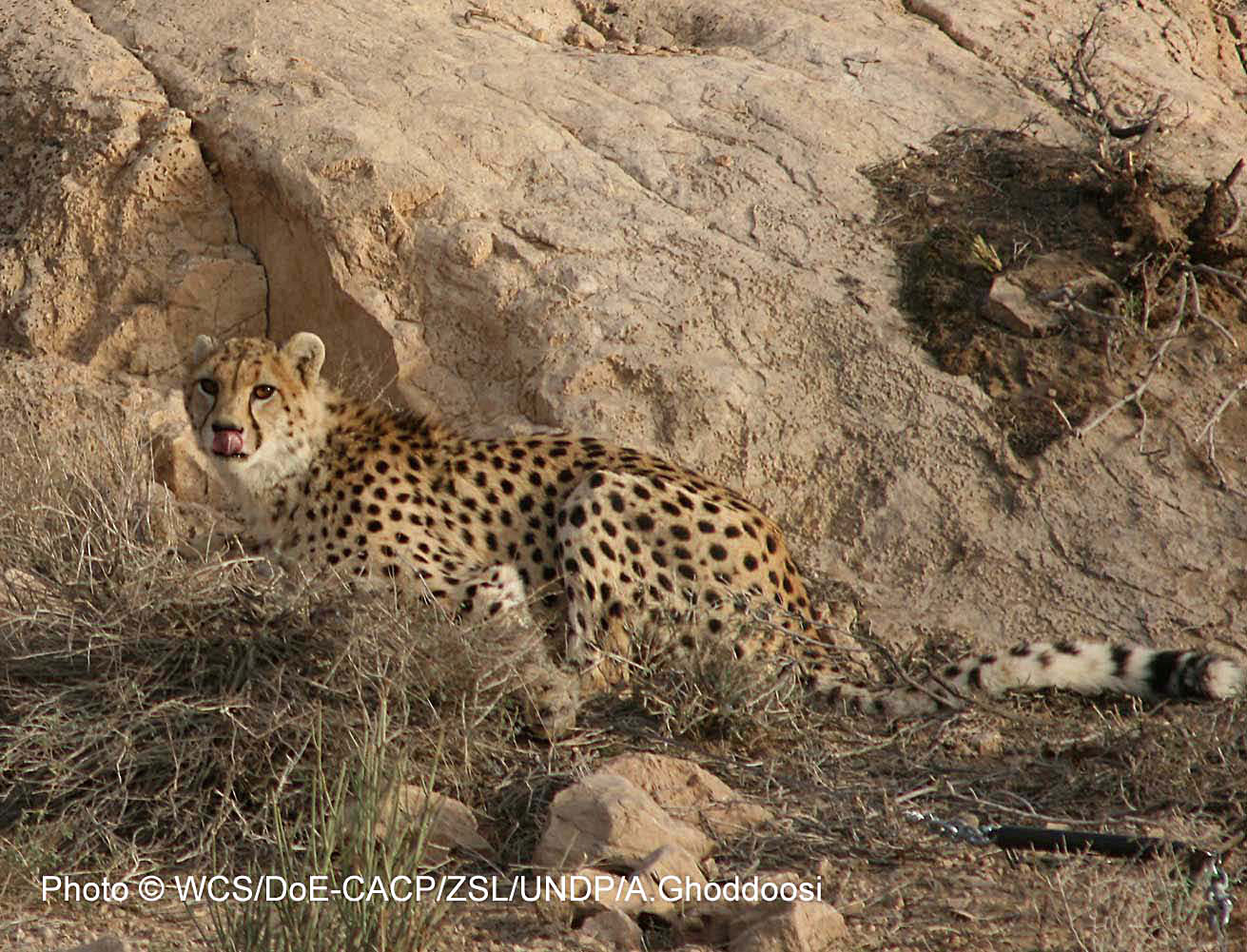
Despite this, I've always wondered what Iran actually looks like from within- and I don't just mean peoplewise. I'm talking nature here. For a large country like Iran, its geography is just as diverse its people. Snow-capped mountains, desert plains, and lush green forests along the Caspian are just a few of the many habitats that shape Iran's natural ecosystem. Mountains- which are a major part of Iran's geography, are home to some of the earth's rarest creatures- namely, the Iranian Cheetah, Persian Leopard, and ibex. Wetlands, which are scattered throughout the arid country, provide major stopovers for migratory birds. Most surprisingly, I've found that Iran has a number of protected areas, wildlife sanctuaries, and environmental agency of its own.
This video is something that I just recently found on Iran's environment. From what I watched of it, it seems as though Iran suffers from the same environmental issues that we do: water pollution, wetland destruction, climate change, and invasive species. Interesting!