Tuesday, December 14, 2010

Winter Landscapes and Birds

Yes, it's wintertime. Temperatures just dropped to 5 degrees farenheit today. For many people, this is a sign to stay indoors and crank up the heating. It's also a sign for some high school kids to finally forgo the baggy shorts or miniskirt in favor of pants. But as much as frozen hair, cold hands, slippery roads, and failing car engines cause us inconvenience, nature- as it is with most things- bears the worst of the elements.

It's really amazing, actually- how some creatures manage to survive the winter. Ducks will frequent any open patch of water, no matter the temperature. Animals will take shelter under bushes and snowbanks. But it's not the temperature or state of being cold that is usually the problem. For most birds, the greatest challenge is finding food. Birds that eat seeds, berries, and rodents often have an advantage over those that eat insects and plant matter. But even for these, survival is often a matter of resourcefulness and luck.

There's an ongoing discussion as to whether humans help or hinder birds in terms of their winter survival. While on one hand, we're destroying endless swaths of habitat, we're also planting shrubs, putting out birdfeeders, and creating artificial shelter. The urban environment that we inhabit creates large rodent populations, which in turn, feed hawks and owls. As proof of this, ELEVEN Long-Eared Owls (which are usually quite hard to find) showed up in the middle of downtown Chicago last winter.

By planting ornamental trees, we have also enabled certain birds to survive much further north than they would otherwise. Robins, for instance, can now be seen throughout winter in most states (I even saw some today!). A robin's winter diet usually consists of berries so we've actually increased their food supply by planting cherry and crapapple trees.

And finally, there are birdfeeders, which provide many species (doves, cardinals, blue jays, finches, and sparrows) with an inexhaustable food source. According to the 2007 Survey of Wildlife Related Recreation, more than 55 million Americans over the age of 16 feed birds, so this definitely has an impact on bird populations.

The fact that birds depend on so many of our artificial conditions may seem a bit disturbing, but even in spite of this, I don't see a problem with helping birds in the winter. First of all, nature is nature. If people have the capacity to drive species extinct, I believe we at least ought to help the others. Save for pigeons, starlings, and house sparrows, the birds you're feeding or providing shelter for are most likely native species. Secondly- just look at Earth today. Humans have altered the environment in so many ways- it would be practically impossible to go back and restore earth to its former status. Despite our recent environmental awareness and restoration efforts, we cannot recreate the past nor bring back extinct species. We can only save those that remain.

Wednesday, December 8, 2010

Iran's Natural Side

Lately in school, we've been reading Reading Lolita in Tehran- a memoir of Azar Nafisi's career, battles, and struggle to educate students in the years following the Iranian Revolution. It's been a great read so far, and in order to better understand its' context, we've been reading up on Iran, Shia Islam, and a variety of related topics.
Looking at Iran from 1979 to present, few countries seem to have generated as much fear and contempt in the international community. For many years, the Islamic Republic was defined by a stern-looking man whose beard and black turban is (and forever will be) associated with theocracy, brutal executions, human rights violations, and anti-western sentiment. In more recent times (Khomeini died in 1989), Iran has been seen as a country that ignores UN rulings, promotes terrorism against Israel, continues to repress dissenting voices, and on top of it all, has a lunatic president whose name I can't even spell correctly.

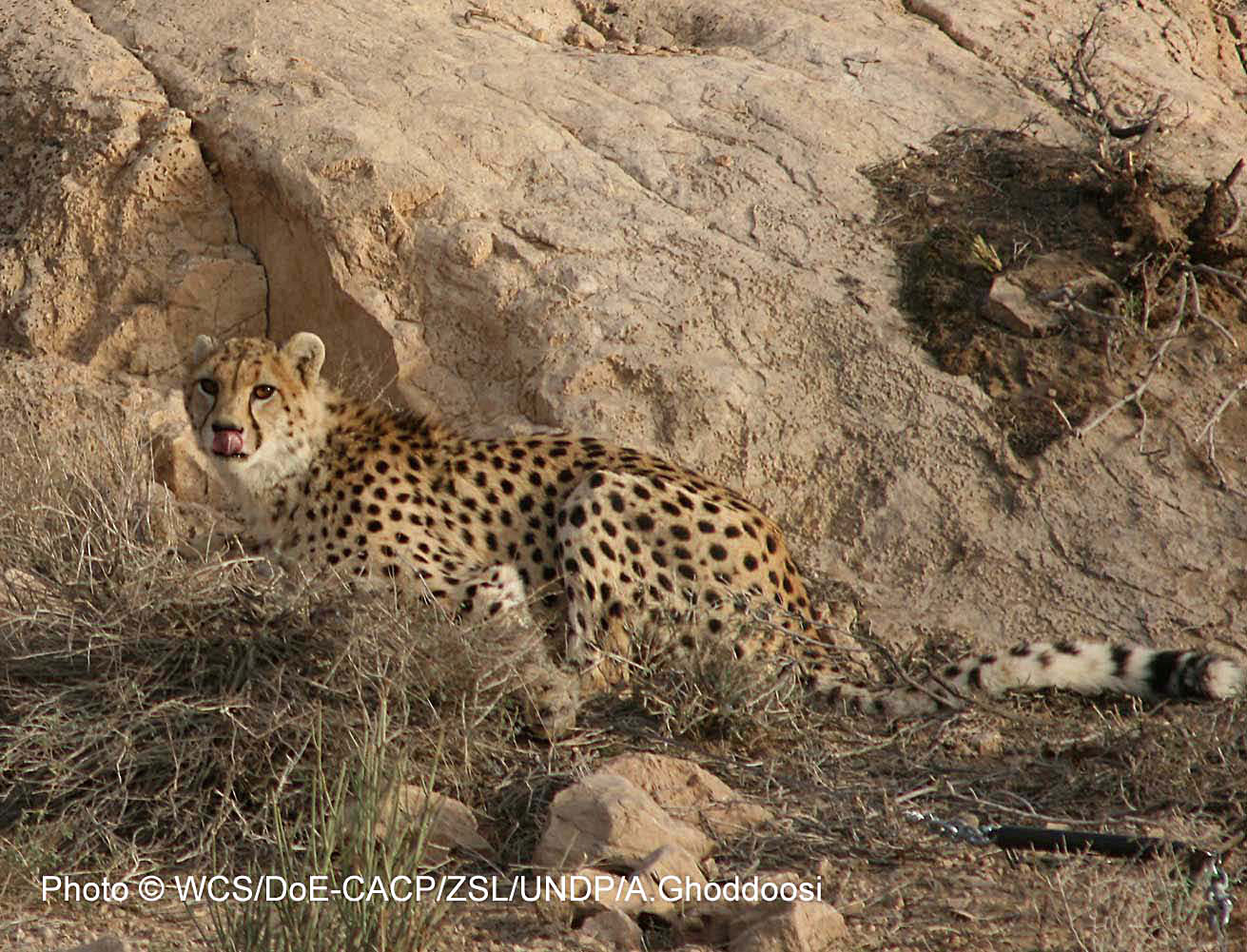
Despite this, I've always wondered what Iran actually looks like from within- and I don't just mean peoplewise. I'm talking nature here. For a large country like Iran, its geography is just as diverse its people. Snow-capped mountains, desert plains, and lush green forests along the Caspian are just a few of the many habitats that shape Iran's natural ecosystem. Mountains- which are a major part of Iran's geography, are home to some of the earth's rarest creatures- namely, the Iranian Cheetah, Persian Leopard, and ibex. Wetlands, which are scattered throughout the arid country, provide major stopovers for migratory birds. Most surprisingly, I've found that Iran has a number of protected areas, wildlife sanctuaries, and environmental agency of its own.
This video is something that I just recently found on Iran's environment. From what I watched of it, it seems as though Iran suffers from the same environmental issues that we do: water pollution, wetland destruction, climate change, and invasive species. Interesting!

Monday, November 29, 2010

Stolen Memories

Hello again! I hope everyone has had a fantastic Thanksgiving. I just spent mine in New York with my grandparents, where we watched James Bond movies, had a huge Thanksgiving dinner, and got to see La Cage Aux Folles performed live on Broadway. Naturally, I also went birdwatching. Two things I was very lucky to see were a Fork-Tailed Flycatcher (a crazy looking thing that somehow wandered in from South America) and a Little Gull (another rarity that I've only seen once before).

Minus the birds, pumpkin pie, and crazy New York people, I also spent a good chunk of time reading Reading Lolita in Tehran for English class. Although the book so far is a great read, one passage in particular stood out as blog material. Here, Azar Nafisi describes how the loss of basic freedoms in her country has affected each generation of people:

"My generation complained of a loss, the void in our lives that was created when our past was stolen from us...Yet we had a past to compare with the present; we had memories and images of what had been taken away. But my [students]...had no past. Their memory was of a half-articulated desire, something they never had." (76)

Now you may ask, "what does this have to do with nature and the environment?". The answer is written in the creed of each and every environmental organization. Why conserve the environment? Why save the whales, the trees, or the pandas? It's always about future generations. We want our children and great grandchildren to witness the planet's natural heritage, just as we want them to witness freedom. And when there are no more whales, trees, or pandas remaining, what are our children left with? An empty void- just like what Nafisi describes.

After learning about some majestic bygone creatures like the elephant bird, Tasmanian Tiger, Great Auk, wooly mammoth, and Dodo, I think we all feel a degree of loss and hopelessness. Like Teddy Roosevelt once said: "When I hear of the destruction of a species, I feel just as if all the works of some great writer have perished."

When you think back to what the world was like before it became despoiled by mankind, it's almost unfathomable. Less than two centuries ago- in the very region I now live in- bison swarmed across in enormous herds, and passenger pigeons literally blackened the skies. Yes- literally. According to historical accounts, a SINGLE flock of passenger pigeons could be 300 miles long, a mile wide, and take SIX DAYS to migrate overhead. A friend of mine- who happens to be writing a book on passenger pigeons- told me how the birds would strip trees of their branches just by landing in them and the beating of their wings would create downdrafts as they took off.

Even after witnessing extraordinary numbers of birds, I cannot imagine anything like this. Passenger pigeons were slaughtered by the thousands and eventually hunted to extinction. The last bird died in 1914, and like Nafisi's students, we have no tangible memories left of them- only stories from a distant past.

Monday, November 15, 2010

The Big Picture (Last Poisonwood post)

A week or two ago, I finally finished reading the Poisonwood Bible. Excellent book. Aside from possessing symbolic actions, vivid descriptions, five intriguing characters, and a well-developed plot, the story offers several vital messages near its end.
One message that struck me in particular came from Adah. As a medical student who quit her profession on moral grounds ("stealing life out of nature's jaws"), she provides an intriguing view of where humans fit into the world.

"In the world, the carrying capacity for humans is limited..." she says. "When Albert Schweitzer walked into the jungle...he meant to save every child, thinking Africa would then learn how to have fewer children. But when families have spent a million years making nine in hopes of saving one, they cannot stop making nine. Culture is a slingshot moved by the force of its past. When the strap lets go, what flies forward will not be family planning, but the small, hard head of a child. Overpopulation has deforested three quarters of Africa, yielding drought, famine, and the probable extinction of all animals most beloved by children and zoos. The competition for resources intensifies, and burgeoning tribes itch to kill each other. For every life saved by vaccination or food relief, one is lost to starvation or war." (528)

This notion that Adah speaks of (overpopulation) is nothing new- as scientists, humanitarians, and family planning services have been addressing it since the 1960's. But as the human population is expected to reach 10 billion in the next decade, this is truly a cause for concern. If you think about it- it's overpopulation that poses the greatest threat to the planet. Climate change, competition for resources, widespread starvation, pandemics, and disruption of ecosystems owe their existence to exploding human numbers.

When the population of a certain organism explodes, nature tends to react with one or more control mechanisms. A large herbivore population may be kept in check by predators, disease, or a limit in food abundance. These are, in a sense, the "laws of nature".

The overpopulation that we face today is not occuring because certain families decide to have nine children instead of one. Rather, it's happening because we lack natural control mechanisms. We've eliminated large numbers of diseases, destroyed all or most animal competition, created nearly limitless food supplies, and thus multiplied our numbers.

Another important fact to note is that we've always had, and always will have plenty of kids. This is what Adah was getting at. Our desire to reproduce is driven by an ever-present genetic instinct. Whether we like it or not, this instinct is always with us. An individual who doesn't wish to reproduce will contribute nothing to the gene pool, whereas the family with nine kids may end up with nine additional offspring for each child.

As of now, it seems as though there is little hope of solving overpopulation without taking drastic measures (ie, cannibalism). Before any action can be taken, however, one major question must be addressed: Are humans really above the laws of nature?

According to Adah, we are far from it. As proven by the Black Death, overcrowded cities and long-distance networks create perfect conditions for the spread of disease. As Adah herself said, "Air travel, roads, cities, prostitution, and the congregation of people for efficient commerce- these are gifts of godspeed to the virus". So perhaps a new strain of disease- one that does not respond to known cures- will end the human stranglehold on the planet. It's not entirely impossible. AIDS, as you know, is a very recent epidemic. And as of now, an entire order of animals may be in the process of extinction. Frogs and ampibians all over the world are believed to be dying from chytrid fungus- a disease that was discovered less than 20 years ago. "What does this have to with humanity?" you may ask. Well, my friend- WE humans could be next.

Also, please save the frogs.

Thursday, November 4, 2010

Word of the Day: Anomaly

Anomaly [uh-nom-uh-lee]. A deviation from the common rule, type, arrangement, or form. An incongruity or inconsistency. It's almost as if someone took the big, chunky word "abnormality" and condensed it until it became smooth and polished.

But I believe "anomaly" describes more than just an abnormality. It describes something curious and unusual rather than an simple glitch in the world's structure. The way the syllables flow, you would think it's some kind of flower or name for a person. But it's not- and the world as we know it is filled with anomalies.
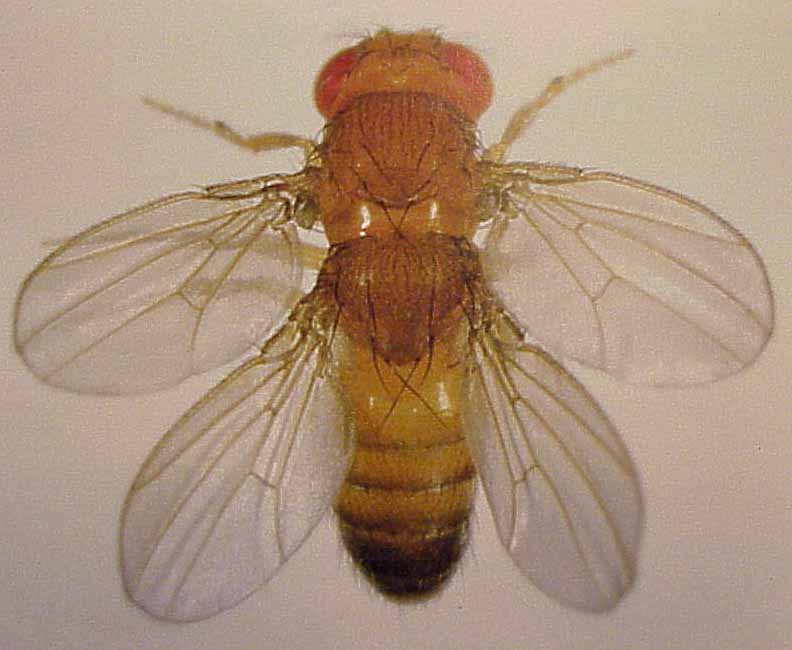
The freakish-looking fruit fly in this picture provides just one example. Its strange condition was caused by a random genetic glitch- or in other words, an anomaly.

In addition to fruit flies, siamese twins, and 4-legged ducks that make the news, nature is filled with plenty of smaller, everyday anomalies. This bird that I photographed a few summers ago is a leucistic Robin, which lacks pigment in certain feathers due to a mutation.
The character Adah from the Poisonwood Bible is also somewhat of an anomaly- not just physically- but in the way she thinks. She rarely speaks, spontaneously thinks up palindromes, and in many ways, stands out from the other members of her family.

The fact that I slept in until 8 today may have also been an anomaly (although it could have been that I just didn't set my alarm clock).

Thursday, October 21, 2010

Hunting

For all the moral and conservation issues it brings up, hunting seems to be part of the human condition. Like cats, wolves, and some of our other primate cousins, early humans depended on hunting for survival. For them, it was not a matter of sport but necessity. But what about today? Are we above the influence of such brutish, primal instincts, or is it only natural that we follow them?

For indigenous communities, it's understandable that people must kill animals for food, and in third-world countries, the harvest of bushmeat may sometimes be the only means of making money. But what about those people who hunt for sport? Is this morally wrong?

In the past, I would have said yes, but as I learn more, it becomes harder to stick with one opinion. Many of the country's greatest naturalists and conservationists (John James Audubon and Teddy Roosevelt) have been hunters themselves. For them, hunting was not only a sport but a means of connecting to the natural world. Even today, hunting is often used as an excuse to get outdoors and enjoy nature. Contrary to what some liberal anti-hunting groups may think, the fun is not focused on killing an animal, but rather finding it, coming face to face with it, and having those long hours of waiting finally pay off.

I've noticed recently that if you compare hunting and birdwatching, the two are pretty much the same thing minus a gun. Birdwatching, which has only become popularized in the latest half- century, may have actually originated from hunting. Hunters and birders alike stalk their quarry, use the same kind of patience, and perhaps enjoy the same sort of adrenaline rush.

This adrenaline rush, which is almost impossible to describe in words, is probably connected to the same hunting instinct of our predecessors. Leah experiences this exact feeling when she kills her first Bushbuck in the Poisonwood Bible. Sickness mixed with heart-pounding excitement. Sensory overload. It's instinct, I tell you. Hunting may be controversial, but that doesn't mean people shouldn't try to understand it. There are too many kinds of hunting for it to be lumped into the singular category of "bloodsport". Those who say hunting is cruel to animals yet continue to eat hamburgers should visit a factory farm, or at the very least, know where their meat comes from. Like Adah (Poisonwood Bible character) said, "The death of something living is the price of our own survival, and we pay it again and again. We have no choice. It is the one solemn promise every life on earth is born and bound to keep."

Update

If you've been following, you'll notice I've changed the title of this blog. Previously, it was Our Living, Breathing Roots, but I figured I'd change it to "Roots in Nature". Such a name is much simpler and friendlier-sounding.

Tuesday, October 12, 2010

Admiration vs. Knowledge (and a book by Gary Larson)


Today, after two classes on the same subject (Barbara Kingsolver's Poisonwood Bible), I decided I would catch up on some reading in the school library. No sooner had I settled in than I noticed an interesting looking book on a shelf. A short, paperback book with a cartoonified worm on the front. Now I'll admit I am one to be easily distracted, but this was an illustrated story by one of my favorite cartoonists, Gary Larson. Gary Larson, if you don't know him, has created countless cartoons- often nature-themed- for his hilarious series known as The Far Side.

This short, clever tale, titled "There's a Hair in my Dirt!", is centered on a family of earthworms at a dinner table. It begins when a a young worm (the son) finds a hair in his food. He becomes upset and disheartened with life, so father worm decides to cheer him up with a story.

The story --which is fraught with Larson's unique sense of humor-- involves a beautiful maiden as she walks through a forest. On each page, she observes some aspect of nature, and unknowingly remarks on how wonderful it is. She sees birds singing and thinks they are happily greeting the day, when in reality, they are shouting pick-up lines and obscenities. She also sees dragonflies and believes them to be "dancing" when they are actually hunting down and dismembering airborne insects. At one point, she observes a snake about to consume a mouse, beats it to death, and saves the mouse- which ironically kills her by transmitting a deadly disease.

In any case, this story challenges many human misconceptions about nature. These include the notion that predators are "evil", birds sing when they're happy, and that nature exists for the sole purpose of looking pretty. What I find particularly impressive about this tale is that it provides ecological facts while maintaining enough humor to captivate anyone.

What I also find particularly funny is how humans are portrayed through this foolish, presuming maiden. Indeed, her example shows that just about anyone can appreciate nature- and while this is generally a good thing, it also shows how blind we can be. Indeed, some people are all too willing to jump to conclusions. This type of ignorance not only blinds us, but also poses danger to other species. In certain western states, for example, wolves are still associated with a negative image and KILLED because people are unable to see their role in the ecosystem. They'll say wolves destroy livestock and go apeshit about eradicating them- even though this has been shown to have negative consequences. In the northern Chicago suburbs where I live, wolves have been exterminated, and the result is an explosion in deer, overgrazing due to deer, and an endless profusion of deer-related diseases.

This theme of knowledge vs ignorance applies not only to nature, but to the rest of the world as well. Like Reverend Nathaniel from the Poisonwood Bible, the woman in the story is good-intentioned, but ignorant and incapable of grasping knowledge, so she ends up causing more harm than good to the world around her (killing a beneficial predator- the snake).

On a more personal level, you can only get you so far by admiring nature's beauty. To truly appreciate the natural world, one must be willing learn about it and make sense of it. Only then can we make sense of the universe and see ourselves in the bigger picture.

Monday, October 4, 2010

Nature's role in the Poisonwood Bible


If you've ever read the Poisonwood Bible, nature is a constant, ever-present theme. Flora and fauna are mentioned on almost every page, from okapis to snakes, hippos, elephants, poisonous trees, otherworldy insects, delicate flowers, tarantulas, monkeys, and crocodiles.

More interestingly, each of the main characters seems to possess varying degrees of connectedness towards nature. Leah, being the most inquisitive, outdoorsy, and adventurous of the family, is also perhaps the most inspired by natural world. She is driven by a sort of childlike curiosity and desire- to climb trees, explore, take note of local customs, and soak up every little detail of her surroundings. As she recalls before arriving at Kilanga: "My heart pounded, for I expected everything: jungle flowers, wild roaring beasts. God's kingdom in its pure, unenlightened glory." (17)

Leah's burning curiosity and interest in the natural world seem reminiscent of Edward O. Wilson's famous "Biophilia Hypothesis"-- the instinctive bond between humans and other living systems. Unlike her mother and sisters, she does not simply observe and appreciate nature where it appears. She seeks it and directly interacts with it: searching for monkeys, climbing trees, cutting up fruit for Methuselah, or catching grasshoppers for Leon (106).

There are two important outcomes of Leah's relationship with nature. One is the fact that she gets the most out of the Congo. Where her father is pulling his hair out over the non-cooperative Congolese, her sister Rachel is wishing she were back at home, and her mother is constantly worried about the family, Leah is saying "Oh, it's a heavenly paradise in the Congo and sometimes I just want to live here forever." (103).

By becoming enthralled with the Congo, Leah is also brought into conflict with some of her traditional beliefs. Part of her wants to be a good Christian girl and make her father proud, where another part of her simply wants to run wild and be free. Just after stating how she could "climb trees just like the boys" and eat guavas "till the juice runs down her shirt", she says "Only I am fifteen now...and must think about maturing into a Christian lady" (103).

Thursday, September 30, 2010

Bugguide.net

Anyone with the slightest interest in nature will know the local deer, squirrels, cardinals, and raccoons, but perhaps know nothing about the most diverse animal group in the world: Insects. Insects are everywhere- in bathrooms, kitchens, and lawns, you name it. A mere garden or yard may hold dozens of species. Insects, however, do not seem to attract the same kind of attention as other creatures, say birds. We have birdfeeders. Bird conservation groups. And who could forget the sight of birdwatchers- binoculars at the ready- tripping over each other as they struggle to get a glimpse of a rare species. Somehow I can't see people doing that for a beetle or bumblebee. The only people who can learn, observe, and be knowledgeable about insects, it seems, are professional entomologists.

Thanks to technology, that statistic seems ready to change. At Bugguide.net, any interested person may create an account, submit photos of insects, and have them identified by an expert. Better yet, these photos are used to create a sort of online field guide and database. This not only provides people with a great source of knowledge, but also helps scientists studying these creatures. Any odd-looking bug that a hiker stumbles across has the potential to be a new or poorly-studied species.

Now that have a Bugguide account of my own, it's as if I've suddenly found new meaning in the world. The thought that every photo of mine somehow contributes to science never ceases to bring me a delightful, giddy feeling. Analyzing this from a broader perspective, it's this feeling that motivates scientists- or better yet- motivates humanity to discover.

This butterfly, which I photographed in my yard, is now part of the website's official guide. It's a Harvester- which is pretty rare and unusual for where I live.

Thursday, September 23, 2010

Hello

If you've ever taken a biology class, you'll probably have heard of "evolutionary adaptation", "communities", "intraspecific competition", "commensalism" and other like terms that describe where certain organisms fit into the big picture. The spider dwelling on the wall behind your computer, for instance, is an small, eight-legged arthropod of the class arachnida. It is an insectivore, and like any other organism, plays a specific role in the local ecosystem (your basement).

But consider this: Where do you fit in? Where do humans fit in? Have we truly risen above the laws of nature? Are we exceptional beings destined to rule the planet, or are we just bundles of genetic material?

But before we address those questions, I'd like to introduce myself. I'm Ari, an 18-year old student in his senior year of high school. I've been interested in science and the natural world for as long as I can remember. I delight in observing nature, which has led to a lifelong passion for birds, insects, and other forms of life. In addition to this, my academic background has brought me knowledge and a keen interest in the world of humanities. By writing this blog, I hope to blend these diverse interests and find common ground between nature and the humanities.

The main question I'll be addressing is what role nature, biology, and our own evolutionary background play in people's everday lives. What is instinctual, and what is learned? Which behaviors and habits of ours have their roots in evolution? What is the connection between humans and nature? How does nature affect the human mindset?

With newfound concepts and fields of study such as eco-psychology, perhaps there are answers to these fundamental questions.

Anyways, enough of that. Happy blogging!

-Ari